Events с Stefan Dodurov
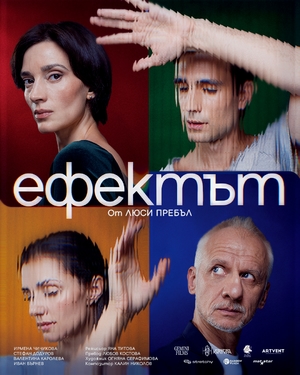
Info - Stefan Dodurov:
Stefan Dodurov is an actor for whom the stage is a natural environment for a lively, continuous dialogue – with partners, with the text and with the audience. In his work, he prefers those roles that do not allow for easy answers and confront the performer with the task of combining precision and spontaneity. This is precisely how his encounter with the audience is in the performance The Effect – a project that explores the boundaries between feeling and chemistry, between the belief that "love is fate" and the doubt that it can be induced in laboratory conditions. In such roles, Dodurov finds an organic field for his acting language: attentive to the meaning of each word, precise in tempo and rhythm and delicate enough to let the silence between the lines "speak" on a par with the text. This approach brings to his performance the kind of credibility that viewers intuitively recognize – not as a spectacular pose, but as an essential presence. Even when the plot takes sharp turns, he maintains a clear, clean line of behavior – almost chamber in its restraint – in which each change is felt as a logical consequence of the previous one, and not as a sharp accent or demonstration of acting power. This is where his characteristic confidence comes from: a calm tone, precise pauses, a look that carefully “measures” the partner and the audience without pressuring them.
The Effect is a dramaturgy that requires something more than a beautifully played emotion to happen on stage. It insists on hearing the “voice” of doubt – scientific, ethical, intimate – and places the actor in a situation of being simultaneously observed and observing. In such an environment, Stefan Dodurov demonstrates a keen sense for nuances – for the small, almost invisible changes in behavior from which the larger plot unfolds. He works precisely with detail: the tilt of the body, the rhythm of breathing, a small gesture of the hand that very slightly “replaces” the meaning of the line. When the stage presents him with a choice between impulse and control, he rarely opposes them; rather, he translates them through each other, so that the impulse is born within the framework of the situation, and the control remains invisible, in favor of human plausibility. This is why each of his partner scenes feels like a real conversation: the tone changes, the question seeks an answer, the pause is “insisted” until the meaning emerges, without sacrificing pace and energy. In a production like The Effect, where high concentration is at stake, such a balance is crucial – it allows the intrigue to develop not through external pressure, but through trust in the logic of human behavior on stage.
Stefan Dodurov's attention to language and to the partner goes hand in hand with respect for the convention of theater. Where the text leaves an open field, he prefers clarity to effect, creating situations that the viewer can “finish” with their own experience. This speaks of an actor who does not pursue only an impression, but a goal – a pure, true line of behavior to human logic. His discipline in the rehearsal process is visible in the result: the scenes “breathe” through a well-ordered construction, but remain alive and susceptible to change with each new encounter with the audience. He has the ability to hear the corrections, to integrate them without mechanicalness and to preserve the most important thing – that specific, human rhythm that gives the role individuality. His work also shows sensitivity to the context of the stage partner: none of his lines “stands alone”, it is an answer or a premise, a bridge or a consequence that supports the whole. This partner loyalty creates a special feeling of trust in the viewer: whatever happens within the performance, it is motivated by a clear internal logic and is presented with respect for the audience’s intellect. Because of this, one can calmly “relax” in the story, follow the characters through their doubts, without being pushed to preconceived conclusions.
When you meet Stefan Dodurov on stage, expect work in which professionalism is not demonstrated, but implied – through clean speaking, a clear score of movement and attention to those small but decisive transitions from which a convincing role is built. Such is his encounter with the audience in The Effect: a performance about the limits of feeling, in which the actor keeps open the question "what exactly do we feel when we say we feel". If you are looking for theater that works with finesse, with intellectual energy and with a human measure, his stage presence offers exactly that – not noise, but clarity; not thesis, but careful investigation; not sensation, but a sustainable, honest experience. Ultimately, it is in such a conversation between stage and audience that the theater that leaves a mark is born, even after the final bow: theater in which the actor does not "play" the truth, but seeks the path to it, step by step, line by line, look by look, until the viewer also feels that he has become part of this search. In this sense, choosing to see his work in The Effect is an invitation to a subtle and awake experience – an encounter with an actor for whom precision and empathy are not means, but principles.